Exploring the Everglades Ecosystem: More Than Just a Swamp Ride
The living system behind the thrill
The Everglades is often described as a swamp, yet that word captures only a hint of what unfolds across this water world. A ride over open sloughs and through quiet channels feels like an adventure, but just beneath the excitement lies a woven fabric of habitats that trade water, nutrients, and energy in a constant exchange. Grasses breathe with the seasons, trees knit coastlines into shelter for young fish, marl plains harden into pale floors that set the stage for orchids and periphyton, and limestone bedrock guides flow like a buried map. Every turn of the prop carries you across boundaries that wildlife crosses daily, and every change in light reveals a new pattern that keeps the system alive. When guests learn to see these patterns, the day stops being only a ride and becomes a tour through an Everglades ecosystem guide that is still writing itself in real time.
What makes this landscape unique is the way shallow water moves slowly across an enormous plain. That gentle sheet of flow shapes everything. In dry months the sheet thins and pulls life toward deeper threads known as sloughs. In wet months the sheet thickens and spreads, reconnecting habitats that were separate only weeks earlier. Plants and animals evolved to match this rhythm. Birds time nesting to the pulse of receding water that concentrates prey. Alligators dig and maintain pockets that hold water when the plain is at its thinnest. Mangrove roots claim the edges where freshwater meets a hint of salt and turn that mixing zone into a nursery. Once you start noticing how each element fills a role, you realize the ride is a moving classroom that explains why the Everglades is more than a scenic backdrop. It is a living engine that turns water into life.
Guests come for speed and scenery and leave with new attention for quiet signals. The tilt of a blade of grass shows flow, a change in water color hints at a shift in depth, and a scatter of shells along a bank suggests a visiting raccoon. These small facts build a story that links what you see today to processes that have been running for centuries. Understanding adds meaning without stealing any wonder. The thrill of gliding across open water feels even better when you can name the habitats that share the horizon and when you know how your choices as a visitor support Everglades conservation for the next group that steps onto the dock.
Habitats that shape the character of the Everglades
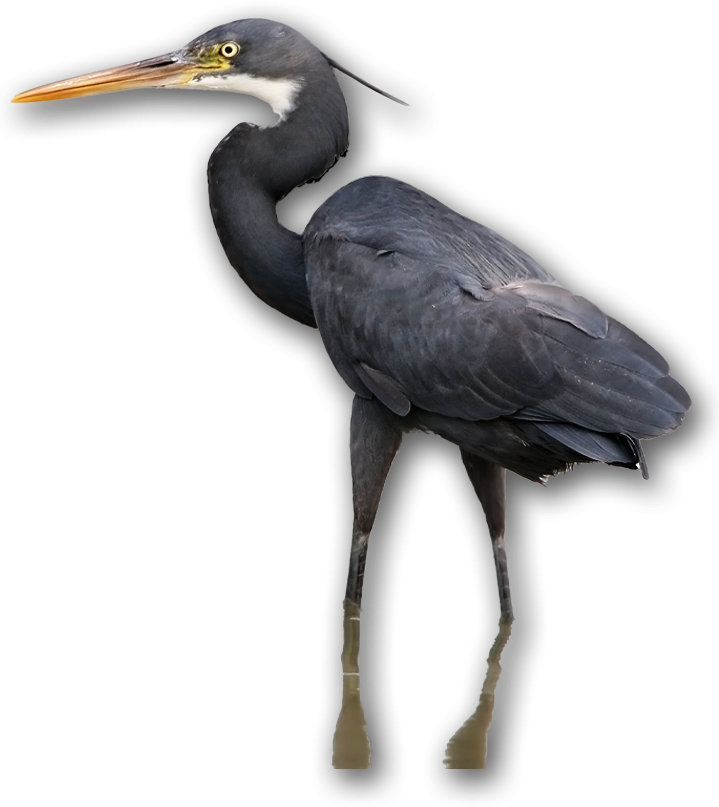
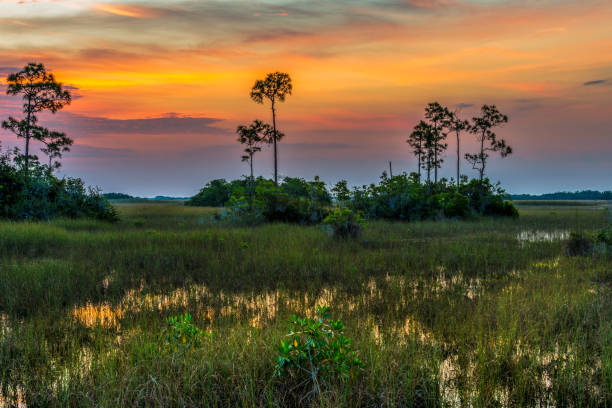
The heart of the interior looks like a sea of grass. Sawgrass prairies stretch toward the sky and ripple when wind moves across the sloughs. This is the scene many people imagine when they picture the River of Grass. The plants here are adapted to shallow water and seasonal changes in depth. Their dense stands slow flow and create shelter for fish and invertebrates that feed almost everything else. Channels thread the prairie like blue ribbons, and along those edges you see the most visible life. Great blue herons stand like statues while eyes track the smallest ripple. Egrets stalk with quick steps in clear shallows. Alligators float like logs with just a pair of eyes above the surface and then ease toward a sun warmed mat of vegetation to rest. The openness of the prairie makes it a favorite route for guests who want long views and clean light for photography.
Marl plains share the interior but tell a different story. Marl is a pale, fine sediment that forms when algae and tiny organisms bind calcium carbonate under clear, shallow water. In the dry season these plains harden into firm flats. Short grasses and wildflowers use that firm stage to bloom, and the ground crackles softly when you walk near the edge. Periphyton mats form a living carpet that glows in the right light, and small fish dart through pockets that hold water as the season changes. These plains nurture a surprising range of life for such a subtle habitat. They also help clean water as it moves, trapping sediments and releasing nutrients slowly. In a healthy year you can trace the transition from slough to marl by watching the palette shift from blue greens to pale creams and soft olives as depth decreases and the floor brightens.
Closer to the coast the scene transforms as mangroves take root. Red mangroves stand on arched prop roots that lift trunks above the tide, black mangroves push pencil roots up from the mud to breathe, and white mangroves settle slightly higher on the shore. These trees stitch shorelines together and make labyrinths that protect small fish, crabs, snails, and juvenile sport species that later move offshore. Leaves fall and break down into food for a vast web of tiny grazers. Birds find perches from which to hunt, and the entire edge becomes a nursery that renews itself with every tide. For riders who enjoy quiet shade and close observation, mangrove tunnels feel like green rooms where light filters down in soft patches and every turn reveals a new detail. The difference between a sawgrass airboat tour and a mangrove ride is not a choice between good and better. It is a choice between scale and intimacy, between sweeping horizons and cooled corridors full of texture.
These habitats do not compete. They cooperate. Water flows from one to the next, carrying dissolved minerals, tiny larvae, and the oxygen that supports life. Wading birds that feed in the prairie rest later in mangrove shade, and fish that grow among roots return to sloughs with the tide. A healthy Everglades depends on connected habitats that share the load. When a guest looks over open water and then glides into a shaded channel, the shift in mood mirrors the shift in ecological function. The ride becomes a tour of complementary roles that keep the system resilient.
Why alligator holes matter more than most people realize
Alligator holes are small depressions that gators clear and maintain with their bodies and with steady effort. To a rider they can look like darker circles in the grass or like quiet basins ringed by slightly higher vegetation. To the ecosystem they are life preservers. During the dry season, when the shallow sheet of water pulls back and sloughs shrink, these pockets remain wet. Fish retreat into them, turtles drop in for shelter, and birds learn to check them daily. The gator that owns the hole benefits from easy access to prey, yet the hole also becomes a neighborhood that shelters many species that would not survive a long dry spell without it.
These depressions do more than store water. They create gradients of depth and shade that support different communities across just a few meters. Edges hold periphyton and grasses that feed invertebrates. Deeper spots hold fish that stir nutrients as they move. When the rains return, water spills from the holes and carries this pulse of life outward. In that moment the hole functions like a seed bank for the aquatic season, repopulating sloughs and flats with energy and diversity. This is ecosystem engineering performed by an animal that people sometimes misunderstand. Seeing an alligator at rest near one of these pockets adds context to the quiet stare. You are looking at the keeper of a water savings account that will fund the next wave of life when the plain floods again.
For guests who seek a deeper Everglades ecosystem guide, learning to spot the subtle signs of a hole becomes a game. Birds circling a single patch after several dry days suggest a pocket below. A difference in plant height around a ring hints at a slightly raised rim built by years of activity. A faint current that moves against the wind shows a slow exchange between the hole and a nearby channel. Captains enjoy teaching these clues because they turn an ordinary stop into a moment of discovery. It is one thing to see an animal. It is another to understand the role that animal plays in a system that keeps many others alive.
Alligator holes also serve as field notes for water management. Their condition reveals whether the seasonal pulse is arriving on time and whether depths match the needs of local wildlife. When holes remain too shallow for too long, fish recruitment suffers and birds shift to other feeding grounds. When water stays high across seasons, holes lose their contrast and their value as refuges declines. Monitoring these features helps managers adjust flows and shows visitors why conservation choices on distant canals matter here among the grasses and roots.
Conservation challenges and why they matter on your ride
An ecosystem this large and this connected faces pressures from many directions. The first challenge is keeping water clean and moving in patterns that match natural rhythms. Historic flow brought fresh water south across the plain in a slow sheet. Development and flood control once interrupted that sheet and sent water down channels that moved too fast or arrived at the wrong time. Restoration projects now work to reconnect paths, spread flow, and improve quality. Every time a rider sees clean reflections in a slough or watches wading birds gather as water recedes, they are watching the success of choices that protect timing and clarity. That is Everglades conservation made visible from the front seat of an airboat.
Invasive species add a second challenge. The Everglades is famous for complex food webs that evolved over long periods. When a non native predator or plant arrives without the checks that keep it in balance, the web can warp. Large constrictor snakes prey on mammals and birds that did not evolve with such hunters. Fast growing plants can shade out native communities and change fire behavior or water use. Managers and volunteers remove what they can, and guides report sightings so teams respond quickly. Guests help by cleaning gear, avoiding the release of pets or plants, and learning the difference between native beauty and an invader that looks similar at a glance. The phrase invasive species Everglades appears often in headlines, yet on the water the story feels personal. A missing chorus of small mammals in an area where they once flourished tells you that the web has shifted and that attention is needed.
Habitat loss and fragmentation form a third threat that arrives quietly. When edges shrink, nurseries shrink with them. When corridors break, animals that need to move between habitats face risk that did not exist before. The cure is not mystery. It is patient protection, smart planning, and the will to keep large connected spaces intact. Visitors who support local conservation partners, who share accurate natural history with friends, and who choose responsible operators add to that will. The choice to tour with care signals that the Everglades is valuable for more than scenery. It is valuable for the services it provides to people and wildlife across the entire region.
Climate adds a fourth layer of complexity. Sea level rise changes salinity at the coast and shifts the line where mangroves can grow. Storms arrive with different patterns than in past decades and can rearrange channels in a single night. Heat can prolong warm seasons and reshape nesting calendars. The system continues to adapt, and careful monitoring helps managers adjust. Guests sometimes ask whether their ride matters against forces this large. The answer is yes. Awareness builds support for projects that keep freshwater moving, and support funds research that keeps adaptation grounded in evidence. A single day on the water can turn a neutral observer into a voice for protection, and many voices together become policy.
How responsible tours turn curiosity into care
Ecotourism works when excitement and respect share the same boat. The crew sets a tone that helps guests read the landscape and treat it well. Before departure the captain explains how speed will change near wildlife and how distance helps animals stay calm. The boat idles in sensitive zones, rests at edges rather than in the middle of feeding sites, and takes routes that avoid repeated disturbance in the same pocket. These habits are invisible to many riders because they feel natural. That is the goal. A great tour should feel effortless while it quietly follows best practices that protect habitat.
Interpretation turns scenes into lessons without ever feeling like a lecture. When a captain points to a line of taller grass and connects it to a deeper thread of flow, a guest learns to spot sloughs with one glance. When a captain explains how periphyton feeds snails and how snails feed limpkins, a guest sees a small patch of green as the start of a food chain rather than as scenery. When a captain shows how a mangrove root filters salt and stabilizes shore, a guest begins to understand why coastal forests matter for storms and for fisheries. These connections are the heart of an Everglades ecosystem guide that is both enjoyable and practical. Guests carry them home and share them with children, neighbors, and friends, and the circle widens.
Responsible tours also choose materials and habits that reduce impact. Reusable water bottles replace single use plastic. Small cleanup kits ride along so any stray litter found on the water can be removed on the way back to the dock. Engines are maintained to run clean and quiet. Routes adjust when wildlife is nesting or when water levels make a familiar corridor sensitive. None of these choices is difficult. Together they express a simple idea. The Everglades is a gift, and every operator and every guest has a role in keeping that gift healthy.
Guests who want to learn more after the ride can explore our story and our commitments. The team shares conservation partners, volunteer days, and ways to help in small, steady steps. Visit our About Us page to meet the people behind the boats and open the door to deeper resources on our Conservation hub. The more you learn, the more the landscape rewards your eye. Details that once slipped by begin to stand out, and each return visit feels richer than the last.
Choosing awareness as part of the adventure
Guests often arrive thinking they will check a box for a classic swamp ride and move on. By the time they step off the boat they realize the day has been something else. It has been a tour through a working landscape that turns sunlight and water into countless lives woven together by timing and place. It has been a lesson in how connected habitats sustain one another and how a single animal can hold a community together by keeping a pocket of water open during a hard month. It has also been a reminder that care is not abstract. Care is a choice made a hundred times per day by crews, managers, and visitors who want this place to thrive.
When you plan your visit, think of your seat as a front row view to a story that includes you. You will feel speed and breeze and the hush that falls when the engine winds down. You will see sawgrass prairies and marl floors and mangrove rooms that glow in filtered light. You will learn how alligator holes carry life from one season to the next and how conservation choices far from the marsh shape what moves beneath your hull today. If you bring that knowledge home and share it, the ride continues in small ways that matter. You might choose a product that supports habitat work, or you might teach a child how to watch the surface for a hint of movement, or you might sign up for a shoreline cleanup on your next visit. Each act links your story to the Everglades in a way that keeps both stronger.
Awareness through ecotourism is not about asking guests to give up fun. It is about pairing joy with understanding so that joy lasts. A ride can be thrilling and gentle at the same time. It can be quiet and full of learning in the same minute. It can be a spark that lights a longer interest in the health of a wetland that supports birds, fish, reptiles, and people across a vast region. That is more than a swamp ride. That is a day that turns curiosity into care and leaves the water a little better than we found it, one smile and one choice at a time.
Wildlife is free to roam and conditions change with water level, season, and weather. Captains follow respectful distances near animals and adjust routes to protect habitat while keeping guests comfortable and safe.
Back to Blogs